Key Points
- Mass Protest Movement: Thousands of demonstrators gathered in Dublin to demand an immediate halt to new data centre construction, highlighting environmental concerns and economic burdens.
- March Route: Organized by coalition groups, campaigners marched from Parnell Square to Leinster House to deliver their demands directly to national lawmakers.
- Financial Burden on Households: Research cited by campaigners indicates that grid strain caused by data centres added an estimated €360 to average domestic electricity bills between 2015 and 2023.
- Environmental and Community Impacts: Protesters cited severe issues including carbon emissions, high water consumption, persistent noise pollution, and reliance on fossil fuels.
- Calls for National Policy Revision: Campaign leaders argue current regulatory frameworks fail to protect communities and allege that worker rights are being compromised by investments in artificial intelligence.
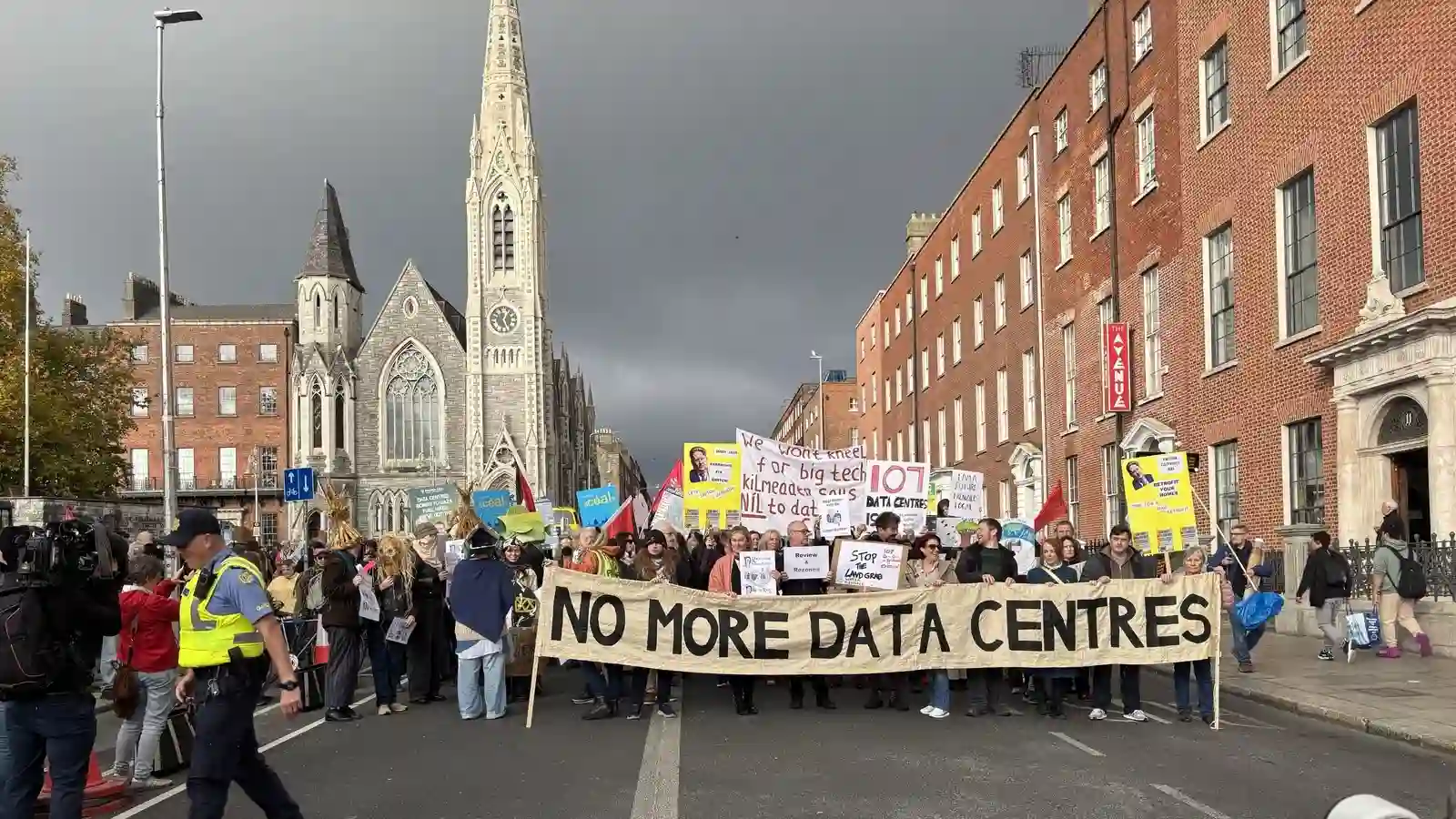
Ireland (Ireland Now News) November 7, 2026 – Thousands of demonstrators took to the streets of Dublin on Saturday, 7 November 2026, to demand an immediate national moratorium on the construction of new data centres across Ireland. Moving from Parnell Square to the gates of Leinster House, civil society groups, regional action committees, and environmental organizations voiced deep opposition to the rapid expansion of digital infrastructure. Campaigners asserted that the high energy demands of large-scale facilities contribute to rising domestic electricity bills, exacerbate carbon emissions, worsen localized noise and water pollution, and lock the country into long-term fossil fuel reliance.
- Why Are Campaigners Demanding an Immediate Halt to Data Centre Construction in Ireland?
- How Is Data Centre Growth Affecting Household Electricity Bills Across Ireland?
- What Are the Global and Environmental Concerns Raised by Protesters?
- Background of the Particular Development After the News
- How This Development Can Affect Irish Households, Energy Policy, and the Tech Sector
Why Are Campaigners Demanding an Immediate Halt to Data Centre Construction in Ireland?
As reported by senior reporter Danny De Vaal of the Irish Mirror, demonstrators are urging the Irish Government to implement an immediate moratorium on data centre developments to allow independent experts to evaluate the true environmental, economic, and social consequences of the sector.
Campaigners emphasized that despite consuming vast amounts of national grid capacity, these facilities generate very few permanent local employment opportunities relative to their physical footprint.
The demonstration assembled at Parnell Square before marching to Leinster House to deliver a unified message to elected representatives. Multiple community groups from across the country participated, drawing attention to the broader environmental footprint of digital facilities, including elevated carbon emissions, localized noise pollution, and intensive water usage for cooling operations.
Furthermore, organizers criticized current statutory regulations, asserting that existing planning frameworks fail to safeguard local communities or protect public utility infrastructure from corporate overreach.
How Is Data Centre Growth Affecting Household Electricity Bills Across Ireland?
As reported by DublinLive and the Irish Mirror, campaign groups highlighted the direct connection between energy grid pressure from data facilities and rising utility costs for everyday consumers.
Rosi Leonard, Data Centre Campaign Lead with Friends of the Earth Ireland, explained the financial strain imposed on Irish households by rapid industrial expansion.
As reported by Danny De Vaal of the Irish Mirror, Rosi Leonard stated: “The real cost of Ireland’s rapid data centre expansion is being borne by ordinary people. A recent report shows that the electricity consumption by big data centres may be resulting in higher energy costs for households. It found the average household may have paid an estimated €360 in additional electricity costs between 2015-2023 due to the intensity of data centre presence on the grid.”
Leonard pointed out that these extra expenses arrive during a period of elevated energy pricing, stating: “With wholesale electricity prices already having doubled in the last 12 months, the last thing people in Ireland need is more pressure on their household bills.”
What Are the Global and Environmental Concerns Raised by Protesters?
As reported by DublinLive, Friends of the Earth Ireland and regional community action groups framed the Dublin demonstration as part of a growing international movement challenging the unchecked expansion of tech infrastructure.
Campaigners questioned whether the public interest is being served by the rapid build-out of infrastructure designed to support speculative technology initiatives.
As reported by DublinLive, Rosi Leonard of Friends of the Earth Ireland stated: “We’re proud to join other countries and communities who are all asking the same question as us: who benefits from massive data centre build out, and who pays the price?”
Addressing the policy justification for an immediate pause on project approvals, Leonard added: “A moratorium on new data centres in Ireland should be common sense; they are increasing our energy bills, they are locking us into a new generation of fossil fuels, and workers’ rights are being undermined more and more by expensive gambles on AI.”
Community representatives from regions including Kildare, Waterford, Clare, Mayo, and Westmeat expressed frustration over localized issues, ranging from persistent low-frequency noise disruptions and sleep disturbance near existing facilities to proposed fossil-fuel power installations intended to support new server farms.
Background of the Particular Development After the News
The protest in Dublin marks a high point in a long-standing national debate over Ireland’s role as a primary European hub for international technology firms. Over the past decade, low corporate tax rates, favorable regulatory conditions, and direct transatlantic submarine cable connections attracted multinational technology corporations to construct extensive data storage facilities across the country.
However, this rapid development has placed significant strain on Ireland’s national energy grid. Figures published by Ireland’s Central Statistics Office (CSO) show that data centres accounted for over 20 per cent of total metered electricity consumed in Ireland in recent years, surpassing the total electricity used by all rural dwellings combined. The Commission for Regulation of Utilities (CRU) previously introduced grid connection restrictions for new facilities, requiring data operators to provide on-site generation or energy storage. Despite these measures, public opposition has intensified as communities link grid capacity constraints directly to delayed renewable energy transitions and elevated consumer tariffs.
How This Development Can Affect Irish Households, Energy Policy, and the Tech Sector
The Dublin protest and growing public opposition to data centre development will have noticeable policy, economic, and operational ramifications across Ireland.
Impact on Domestic Energy Consumers and Public Advocacy
For Irish households struggling with living costs, increased public scrutiny could prompt government agencies and energy regulators to review tariff structures. If pressure from advocacy groups continues to build, state regulators may explore mechanisms to ring-fence residential consumers from grid upgrade expenditures triggered by large commercial users, potentially mitigating future price surges on domestic utility bills.
Impact on Government Policy and Environmental Targets
For the Irish Government and the Department of the Environment, Climate and Communications, the rising public backlash presents a major policy challenge. Lawmakers will face tough choices when attempting to balance statutory climate commitments—such as reducing carbon emissions by 51 per cent by 2030—with maintaining an open environment for foreign direct investment. Political parties may be pushed to consider stricter moratoriums or require all new data facilities to run entirely on dedicated, off-grid renewable energy sources.
Impact on Technology Companies and Regional Investment
For multinational technology firms and commercial developers, the growing opposition signals increased regulatory and legal friction for future projects. Proposed facilities are likely to face lengthy planning appeals, judicial reviews, and extended public consultations. As a result, technology companies may alter their capital expenditure plans, diverting future data centre investments away from Ireland toward European jurisdictions with surplus renewable power and more receptive regulatory frameworks.