Key Points
- Northern Ireland’s major political parties have presented starkly contrasting assessments following high-stakes talks with Northern Ireland Secretary Sir Chris Bryant regarding Stormont’s budget deadlock.
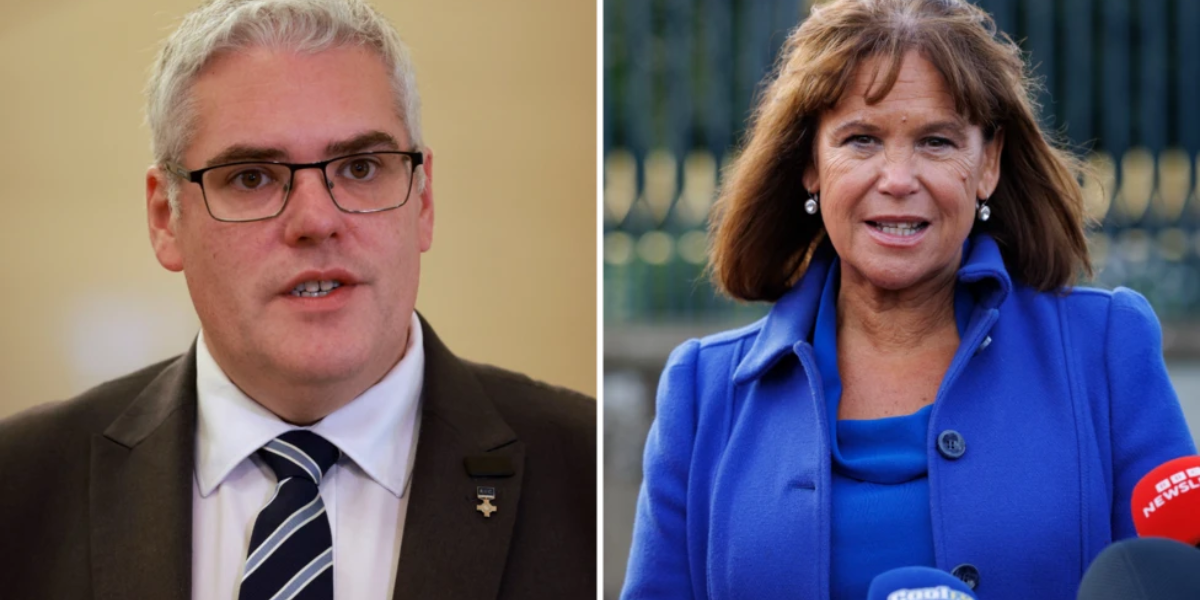
- Sinn Féin Leader Mary Lou McDonald accused the UK Government of attempting to “shortchange” the public in Northern Ireland, insisting the party will not accept a package that falls short of public service needs.
- Democratic Unionist Party (DUP) Leader Gavin Robinson described discussions as “uncharacteristically” constructive, expressing optimism that the funding gap could narrow enough to give the Executive a “fighting chance”.
- Sir Chris Bryant reiterated that no additional funding beyond the offered £1.5 billion over three years (£525 million available this year) will be granted, warning that departments face an absolute deadline in January before emergency funds dry up.
- Due to the absence of an agreed budget, public sector staff and civil servants will not receive long-awaited pay awards before Christmas, triggering upcoming strikes by hospital doctors and nurses.
- Prime Minister Andy Burnham urged Northern Ireland ministers to “step forward” and be realistic, maintaining that the UK Government cannot continuously bail out the Executive given national financial constraints.
Belfast (Ireland Now News) October 22, 2026 – A profound political rift has emerged among Northern Ireland’s key party leaders following critical bilateral discussions with Secretary of State Sir Chris Bryant over the ongoing Stormont budget crisis. With the UK Government holding firm on its £1.5 billion financial package and the Executive facing an estimated funding deficit of up to £1.6 billion, political leaders remain sharply divided over whether the offered terms provide a viable lifeline or impose severe austerity on essential public services.
- Key Points
- Why Is Sinn Féin Accusing the UK Government of Shortchanging Northern Ireland?
- How Does the DUP View the Recent Progress in Budget Talks?
- What Position Has the UK Government Taken on Stormont’s Finances?
- What Are Other Northern Ireland Parties Saying About the Budget Crisis?
- How Are Public Sector Workers and Civil Servants Affected?
- Background of the Stormont Budget Crisis
- Prediction: How Will This Development Affect the People of Northern Ireland?
Why Is Sinn Féin Accusing the UK Government of Shortchanging Northern Ireland?
As reported by David Young and Rebecca Black of PA Media, Sinn Féin leader Mary Lou McDonald delivered a stinging rebuke of Westminster’s financial stance following her in-person delegation meeting with Sir Chris Bryant. McDonald asserted that the financial package offered to the Northern Ireland Executive falls radically short of the capital required to maintain public infrastructure and fulfill binding worker pay agreements.
According to PA Media, McDonald stated that the UK Government “needs to come up with the right resource to ensure that society and communities don’t suffer”. Speaking to journalists outside Parliament Buildings at Stormont, McDonald declared: “They can’t shortchange people who live here. We won’t accept, or sign on or tolerate that”. She further emphasized political solidarity across the Executive on this specific issue, noting: “I believe on this point, if on little else, there is agreement right across the executive and the political spectrum here, that the British government is attempting to shortchange the north of Ireland – and that we will collectively face that down”.
How Does the DUP View the Recent Progress in Budget Talks?
In contrast to Sinn Féin’s sharp criticism, Democratic Unionist Party (DUP) leader Gavin Robinson offered a markedly different evaluation of the ministerial negotiations. As reported by PA Media, Robinson described the meeting with Sir Chris as “uncharacteristically” constructive, suggesting that a pragmatic framework is beginning to take shape.
As documented by political correspondent Rebecca Black, Robinson conceded that “it is now clear to the secretary of state that no matter whether this executive passes a budget or indeed he steps in and government pass it on the executive’s behalf, the books cannot balance”. However, Robinson highlighted that a renewed “sense of realism” could provide Stormont with a “fighting chance to balance the books”.
Expanding on the potential path forward, Robinson stated: “I do think there is an opportunity for us to continue engagement and also look toward Wednesday of next week to see whether the gap can be closed sufficiently that would allow the executive a fighting chance to balance the books”. He acknowledged that while it “wouldn’t be realistic to imagine that the gap will be entirely closed,” a combination of the money on offer, reprofiling existing constrained Executive funds, and upcoming Treasury announcements could move the process “a huge step forward” when realism sits at the heart of discussions.
What Position Has the UK Government Taken on Stormont’s Finances?
The UK Government has firmly maintained that the financial offer currently on the table represents the absolute limit of Westminster’s support. As detailed by GOV.UK official releases and reported by Perspective Media, Sir Chris Bryant offered a financial package worth approximately £1.5 billion spread over the next three years. The breakdown includes £1.25 billion in resource funding (£525 million available in the current financial year), £150 million dedicated to public service transformation, £100 million for social housing, and £75 million to target benefit system fraud and error.
As reported by James McCarthy of Belfast Live, Prime Minister Andy Burnham recently addressed the House of Commons during Prime Minister’s Questions, addressing queries from Ulster Unionist MP Robin Swann. Burnham underlined that Whitehall departments are simultaneously being subjected to in-year spending cuts.
As quoted by James McCarthy of Belfast Live, Burnham stated: “I found extra money and there comes a point where people have to work together to set a budget. It can’t always be our responsibility. We stepped forward and I ask all parties in Northern Ireland to do the same – set a budget and get Stormont functioning as it should”. Furthermore, during a House of Commons session, Sir Chris Bryant emphasized that there must be strict “political accountability for finances” and warned that emergency spending provisions keeping departments afloat will run out by January.
What Are Other Northern Ireland Parties Saying About the Budget Crisis?
Smaller and opposition parties within Northern Ireland have expressed deep frustration at the political stalemate, warning against political gamesmanship while public services deteriorate.
As reported by PA Media, Alliance Party deputy leader Eóin Tennyson insisted that the budget process “cannot remain in a state of suspended animation forever” and must be resolved swiftly. Tennyson criticized main executive parties, stating that they were “investing their time and energy into reigniting the divisions of the past rather than focusing on what really should unite us,” adding, “Because whenever the circus leaves town we still have serious jobs to do. We still have public services to run and public servants who need paid”.
As detailed by David Young of PA Media, Ulster Unionist Party (UUP) deputy leader Diana Armstrong called for “calm leadership” over “the last two weeks of distraction and chaos,” stressing that healthcare workers urgently “should be rewarded for the work they do”.
Meanwhile, Social Democratic and Labour Party (SDLP) Assembly Member Matthew O’Toole, leader of the official opposition at Stormont, stated that while rival factions “indulge in recreational division, they are plunging this place into crisis by refusing to set a budget”. O’Toole insisted that neither Westminster nor the four-party Executive can “abdicate responsibility” for the real-world consequences imposed on the population.
How Are Public Sector Workers and Civil Servants Affected?
The absence of an agreed budget has directly halted public sector pay settlements across Northern Ireland. Under current legal mechanisms, departments have been forced to operate under contingency arrangements, limiting expenditure to 95% of the previous year’s budget allocation.
As reported by BBC Radio Ulster’s Good Morning Ulster, Robert Murtagh of the FDA union—which represents senior civil servants—voiced deep frustration over stalled negotiations. Murtagh stated that civil servants have become “collateral damage” in the political standoff, adding: “As far away from the budget we are… we’re also away from civil service pay”.
The crisis has reached a critical administrative threshold. Speaking at Stormont’s finance committee, the Department of Finance’s top civil servant, Neil Gibson, confirmed that it is now formally too late to process civil service pay settlements before Christmas. Gibson stated to Assembly members: “We’re too late in the year for Christmas for the sector I’m in”. Consequently, hospital doctors have announced planned industrial action for next month, and the Royal College of Nursing is actively balloting members for strike action over unresolved pay disputes.
Background of the Stormont Budget Crisis
The current budgetary conflict is rooted in structural financial deficits and prolonged governance disruptions in Northern Ireland. Since the restoration of the Northern Ireland Executive, devolved ministers have struggled to reconcile escalating costs in health and social care with baseline block grant allocations determined by the UK Treasury.
Throughout the current financial year, executive departments have functioned without a formal budget. Operating on emergency contingency funding capped at 95% of prior-year spending, ministers have been legally restricted from authorizing new long-term spending plans or signing off on inflationary wage adjustments for public sector employees. Independent spending watchdogs have estimated that Northern Ireland departments face a total cumulative shortfall reaching up to £1.6 billion.
In September 2026, Secretary of State Sir Chris Bryant put forward a £1.5 billion financial package over three years contingent on structural public service reforms, efficiency targets, and local revenue-raising measures. However, executive parties initially rejected the terms as insufficient to close the immediate structural deficit. With Westminster preparing its own national budget publication and a hard legal limit arriving in January—when emergency department spending powers legally expire—the deadlock has escalated into a pivotal constitutional and administrative standoff.
Prediction: How Will This Development Affect the People of Northern Ireland?
If the budget impasse continues past the imminent deadlines, the everyday lives of citizens across Northern Ireland will be severely disrupted across multiple socio-economic dimensions.
First, public sector workers—including nurses, doctors, teachers, and civil servants—face immediate financial hardship as earned pay awards are frozen until at least early next year. The delay in settlements during an ongoing cost-of-living crisis will inevitably compound workforce attrition, fuel widespread industrial action, and lead to reduced staffing levels across core public sectors.
Second, healthcare and civil infrastructure will experience compounding strain. With hospital doctors striking and nursing unions balloting for action, routine surgical procedures, outpatient appointments, and emergency service response times will likely deteriorate further. Operating under restricted 95% contingency funds prevents health trusts and local authorities from