Key Points
- Taoiseach Micheál Martin pledged that the Irish Government will “go after” and hold accountable those responsible for mass bomb threats sent to national broadcaster RTÉ and numerous other media outlets across Ireland and Britain.
- The threat triggered the evacuation of staff from RTÉ’s Donnybrook campus in Dublin, as well as precautionary responses at other media organizations including Newstalk and the Irish Independent.
- An Garda Síochána, the Defence Forces, cyber security agencies, and European aviation and security counterparts are actively investigating whether the threats were executed by individuals or a coordinated hybrid attack network.
- The security alert follows a wave of at least 27 flight disruptions across Europe caused by hoax bomb threats targeting commercial airlines, including Aer Lingus and Ryanair.
- Tánaiste Simon Harris, Minister for Justice Jim O’Callaghan, RTÉ Director General Kevin Bakhurst, and National Union of Journalists (NUJ) representative Seamus Dooley strongly condemned the incident as a direct attack on press freedom and democratic institutions.
- Political figures, including Sinn Féin leader Mary Lou McDonald, Social Democrats spokesperson Sinéad Gibney, and Labour TD Ciarán Ahern, expressed deep concern over the security breach ahead of Ireland hosting major European summits.
Ireland (Ireland Now News) November 6, 2026 – Irish Taoiseach Micheál Martin has declared that state security services will relentlessly pursue those responsible for coordinated bomb threats targeting national broadcaster RTÉ and scores of news outlets across Ireland and Britain. Speaking on Friday, 6 November 2026, after staff were evacuated from RTÉ’s Donnybrook campus and other major media offices in Dublin, Martin confirmed that An Garda Síochána, the Defence Forces, and international cyber and aviation authorities are working to trace the perpetrators. The mass threat, sent via email, comes on the heels of a broader wave of hoax alerts that disrupted 27 European flights and precedes two high-profile European political summits scheduled in Ireland.
- How Did the Bomb Threats Unfold Across RTÉ and Other Media Organizations?
- What Was the Response from Taoiseach Micheál Martin and Government Ministers?
- How Did Political Leaders and Industry Representatives React to the Incidents?
- Background of the Particular Development After the News
- How This Development Can Affect National Security, Media Operations, and European Diplomacy
How Did the Bomb Threats Unfold Across RTÉ and Other Media Organizations?
As reported by broadcaster David McCullagh on RTÉ Radio 1, the alarm was raised on Friday morning following the arrival of a malicious email warning of explosive devices planted on the broadcaster’s premises.
The threat targeted RTÉ’s main Donnybrook campus in South Dublin alongside dozens of print, digital, and broadcast news organizations across Ireland and the United Kingdom, including commercial radio broadcaster Newstalk and the Irish Independent.
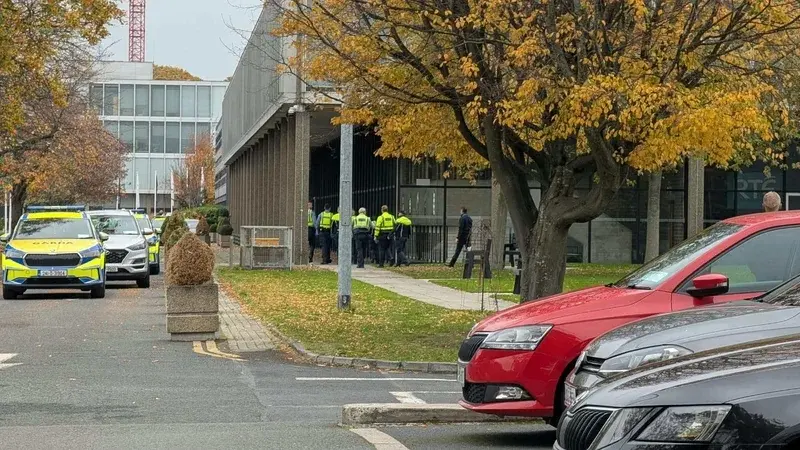
Upon receiving the warning, RTÉ management initiated emergency protocols, evacuating staff from studio buildings while Garda officers conducted building-by-building sweeps. To maintain continuous broadcasting, news teams operated out of mobile broadcasting units stationed outside the main campus.
Addressing the decision to evacuate, RTÉ Director General Kevin Bakhurst stated: “On the basis of the information we had, we decided that we wanted to put the safety of the staff first and evacuate the buildings.” Bakhurst acknowledged the operational disruption, noting: “Luckily we have contingency plans in place – which we reviewed quite recently. It’s a disgraceful attack on the media, on free media, and unfortunately, probably where it comes from, they don’t really appreciate the importance of free media.”
Gardaí declared the Donnybrook campus safe later in the morning after search operations produced no explosive devices.
What Was the Response from Taoiseach Micheál Martin and Government Ministers?
Speaking in an interview with RTÉ Radio 1 while presenting staff were operating from mobile broadcast units, Taoiseach Micheál Martin described the threats as “worrying” and assured the public that the government is treating the situation with absolute urgency.
Reflecting on the ongoing investigation, Taoiseach Micheál Martin stated: “The gardaí, the Defence Forces, cyber and aviation authorities are working to establish who is behind this as are their European counterparts. So, it’s not determined yet whether it’s individuals or a co-ordinated attack, however we will go after this to identify who is responsible and to hold them accountable. And we have very skilled experts now who are working to identify those responsible for this, but our ultimate priority is the safety of our people.”
Martin noted the broader pattern of disruption, linking the incident to recent threats against aviation: “It just illustrates how relatively simple it can be to cause disruption and to undermine the normal operation of society through unconventional activities of this kind, which are designed to cause disruption, designed to cause fear and anxiety. So we have to remain calm and very focused on this.”
Tánaiste Simon Harris echoed these concerns, emphasizing the democratic stakes involved. Speaking on Cork’s 96FM, Tánaiste Simon Harris stated: “Any attack or threat of attack on the media is a threat and attack on our democracy. While it is too early to determine who is behind this spate of action, it is an important reminder that this country is not immune from threats.” Harris added that the incident served as a “stark reminder that the country is not immune from hybrid threats, cyber threats or security threats.”
Minister for Justice Jim O’Callaghan confirmed he had received detailed security briefings, stating: “Europe has increasingly become the target of different forms of hybrid attacks, which are evolving in complexity and sophistication… Threats of this nature are completely unacceptable and every effort will be made to identify those responsible.”
How Did Political Leaders and Industry Representatives React to the Incidents?
Across the political spectrum, opposition leaders and press freedom advocates issued swift condemnations of the intimidation campaign.
Seamus Dooley, Irish Secretary of the National Union of Journalists (NUJ), categorized the coordinated email threats as a “deeply disturbing” attack on press freedom.
In a formal statement, Sinn Féin leader Mary Lou McDonald voiced strong concern for media workers: “I am deeply concerned by these threats. My thoughts are with the staff who were evacuated and with their families. I commend everyone who responded swiftly to ensure people’s safety. These threats are completely unacceptable, and I hope the garda investigation establishes who is responsible and they face the full rigours of the law.”
Social Democrats media spokesperson Sinéad Gibney offered solidarity to newsrooms, stating: “In a time where more and more journalists globally are facing violence and intimidation, I send my support to those affected by what is currently happening across media offices in Dublin, including RTÉ, Newstalk and the Irish Independent, where staff have been evacuated. While the nature of the threat is unclear, the safety of those working in these organisations must be paramount. We must resist attempts to silence and threaten our media wherever they arise.”
Speaking outside Leinster House in Dublin, Labour Party TD Ciarán Ahern characterized the situation as “very troubling.” Ahern urged the Government to resolve ongoing public sector pay disputes and work-to-rule actions, noting that Ireland is preparing to host a major European summit: “We don’t want to see any distractions… Next week at the height of our EU Presidency, there will be more diplomats and politicians here than ever before.”
Background of the Particular Development After the News
The mass evacuation of media premises in Dublin represents an escalation in a series of security alerts that have affected European infrastructure throughout early November 2026. Just 24 hours prior to the newsroom threats, at least 27 commercial flights across Europe—including aircraft operated by Irish carriers Aer Lingus and Ryanair—were subjected to false bomb warnings, forcing emergency diversions and tactical runway sweeps before all affected aircraft landed safely. Security agencies across the European Union have increasingly warned member states of asymmetric “hybrid warfare” tactics, which use digital hoaxes, cyber intrusions, and automated threats to trigger widespread social anxiety, economic friction, and operational strain on public emergency resources.
The timing of these disruptions coincides with Ireland’s hosting responsibilities under its Presidency of the Council of the European Union. State authorities are making final preparations for two major international diplomatic gatherings in Dublin: the European Political Community summit and an informal meeting of the European Union Council. The events will bring together 55 heads of state and government, representing the largest gathering of foreign leaders in the state’s history. Consequently, Irish security forces, the Defence Forces, and National Cyber Security Centre (NCSC) teams have operated under heightened alert status, working alongside international intelligence partners to safeguard critical national infrastructure.
How This Development Can Affect National Security, Media Operations, and European Diplomacy
The mass threat against press outlets and its broader connection to European transport disruptions carry direct implications for public policy, newsroom security, and international diplomatic logistics.
Impact on Media Organizations and Newsroom Safety Protocols
For news organizations across Ireland and the UK, the incident will necessitate a comprehensive audit of facility security, digital communications intake, and contingency broadcasting operations. Broadcasters like RTÉ demonstrated that mobile units can maintain transmission during building evacuations, but news outlets will likely invest further in automated threat-screening software for newsroom communications, enhanced access controls, and emergency protocols to protect journalists from physical and psychological intimidation.
Impact on Irish State Security and Intelligence Infrastructure
For An Garda Síochána, the Defence Forces, and Irish intelligence bodies, the spree of hoaxes accelerates the urgency of upgrading hybrid warfare defense mechanisms. Investigating agencies will focus heavily on digital forensics, cross-border IP tracking, and coordination with EU security agencies to identify whether the threats originate from state-sponsored actors, cyber-criminal syndicates, or domestic extremists. The government may also face calls to increase capital allocations toward cyber-defense capabilities and the National Cyber Security Centre.
Impact on European Diplomatic Summits and Public Transit Networks
For European leaders and summit organizers arriving in Dublin, security protocols surrounding transport hubs, conference venues, and diplomatic residences will be elevated to unprecedented levels. While the hoaxes aim to create operational delay and administrative fatigue, state authorities will implement stricter screening procedures across Irish airspace, maritime borders, and municipal transit systems to guarantee the safety of visiting delegations while mitigating disruption to everyday civilian life.