Key Points
- Representative Ilhan Omar announced she can no longer safely reside in her Washington D.C. home with her children after federal agents searched the property, citing security vulnerabilities and ongoing death threats.
- Homeland Security Investigations (HSI) executed a pre-dawn search warrant on 12 October, involving 15 to 25 agents who searched the premises for roughly five hours.
- Federal agents confiscated 17 personal items, including cell phones, personal computers, notebooks, a passport, a Somali-language children’s book, and a 1960s vintage camera belonging to her husband.
- Over a dozen subpoenas have been issued to members of Rep. Omar’s family as part of an ongoing federal criminal investigation.
- Rep. Omar and former President Barack Obama have denounced the investigation as an abuse of power and political intimidation, whilst President Donald Trump and border officials have denied direct involvement or defended the legitimacy of federal inquiries.
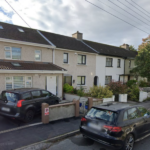
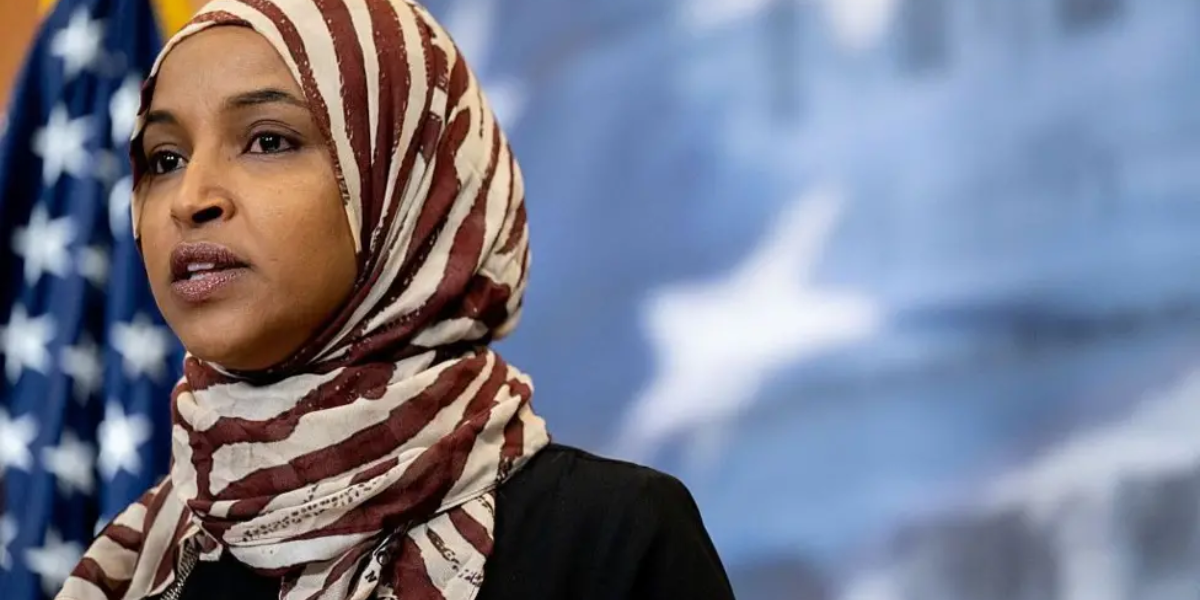
Washington D.C. (Ireland Now News) October 22, 2026 — Minnesota Representative Ilhan Omar has revealed that she is being forced to move out of her Washington D.C. home after federal agents executed a pre-dawn search warrant on the residence last week. The Democratic lawmaker stated that exposure of her address, coupled with long-standing security risks, has made remaining at the property unfeasible for her and her children. Federal authorities confirmed the raid is part of an ongoing criminal investigation, though no charges have been filed.
- Key Points
- Why Is Representative Ilhan Omar Relocating Her Family From Her Washington D.C. Home?
- What Happened During the Pre-Dawn Federal Search of Rep. Omar’s Residence?
- What Items Were Seized by Federal Agents During the Search?
- What Is the Scope and Basis of the Federal Investigation?
- How Have Political Leaders and Officials Reacted to the Raid?
- Background of the Particular Development
- Prediction: How This Development Can Affect Lawmakers, Political Standards, and the Electorate
Why Is Representative Ilhan Omar Relocating Her Family From Her Washington D.C. Home?
In her first public broadcast interview following the federal search, Rep. Omar explained her decision to leave her Washington D.C. residence. Speaking to network MS NOW, Rep. Omar cited heightened security risks following the public exposure of her home during the execution of the search warrant.
As reported by MS NOW, Rep. Omar stated: “With the death threats that I deal with, it’s not, it’s no longer going to be feasible to be in that house and have my kids.”
The lawmaker emphasized that security concerns surrounding her personal residence had reached a critical threshold, forcing her to seek alternative living arrangements to safeguard her family.
What Happened During the Pre-Dawn Federal Search of Rep. Omar’s Residence?
Describing the events of 12 October, Rep. Omar recounted waking at approximately 06:00 EDT (11:00 BST) to heavy knocking on her door. The abrupt arrival startled both the Congresswoman and her husband, who were in bed at the time.
As reported by MS NOW, Rep. Omar described the initial moments of the encounter, stating: “We were screaming.” She went on to characterize the entire incident as “so bizarre.”
Upon going downstairs, Rep. Omar requested a search warrant, which officers presented at the door. She estimated that between 15 and 25 federal agents from Homeland Security Investigations (HSI) had surrounded her property. Rep. Omar noted that the agents spent roughly five hours systematically searching room after room while she watched from the couch. She observed that despite the intrusive nature of the operation, the agents “conducted themselves in a decent way” and were “intrusive but polite,” returning items to their positions after inspection.
What Items Were Seized by Federal Agents During the Search?
Federal investigators removed a total of 17 personal items from Rep. Omar’s residence before concluding the five-hour operation.
As reported by Eric Berger of The Guardian, alongside reporting from MS NOW and Associated Press, the seized items included:
- Multiple mobile phones
- Personal notebooks and computers
- Rep. Omar’s passport
- A Somali-language children’s book
- A vintage camera from the 1960s belonging to Rep. Omar’s husband
Additionally, reporting by The Guardian noted that more than a dozen subpoenas have been served to members of Rep. Omar’s extended family as part of the broader inquiry. Rep. Omar’s legal team has since formally requested that the U.S. Department of Justice return all seized property and preserve any audio or video recordings made during the search, describing the operation as “neither justified nor lawful.”
What Is the Scope and Basis of the Federal Investigation?
Federal law enforcement agencies have maintained a tight lip regarding the exact criminal statutes involved. When contacted for clarification, Department of Homeland Security (DHS) officials referred queries to the Department of Justice (DOJ). The Department of Justice confirmed that the search was conducted as “part of an ongoing federal criminal investigation” but declined to elaborate on specific allegations.
As reported by The Wall Street Journal and WORLD Magazine, the federal inquiry is examining potential discrepancies in immigration paperwork dating back to Rep. Omar’s childhood arrival in the United States. Investigators are reportedly looking into whether Rep. Omar’s birthdate or age was altered on citizenship documentation filed when she arrived from Kenya in the 1990s as a minor. Rep. Omar entered the U.S. as a 12-year-old refugee after obtaining asylum and became a naturalized citizen in 2000.
Addressing these reports during her interview, as reported by MPR News, Rep. Omar stated: “It would be a huge undertaking to, I suppose, indict a 12-year-old for so cleverly conspiring to defraud immigration services to come to the United States. I’m sure there are a lot of smart 12-year-olds, but that seems like a leap.”
How Have Political Leaders and Officials Reacted to the Raid?
The federal action has drawn intense reactions across the political spectrum. Immediately following the search, Rep. Omar released an online statement condemning the probe.
As reported by Fox 5 NY, Rep. Omar stated: “I’m ok. Make no mistake: this is an attempt to target political enemies and weaponize federal law enforcement. For ten years, Trump has targeted me with baseless lies and smear campaigns. This is just the latest escalation in his campaign of political intimidation. I will not be silenced.”
Former President Barack Obama issued a lengthy public statement rebuking the federal government’s actions.
As reported by Just The News and BarristerNG, former President Barack Obama stated that the probe was “so appalling” and added: “The full weight of the federal government is being brought down on a law-abiding elected official because she has dared to criticize the president.” Former President Obama further warned that the federal search sets a dangerous precedent for the prospective intimidation of political opponents by future administrations.
In contrast, administration representatives defended the legitimacy of federal inquiries. As reported by Daisy Sachoff of WORLD Magazine, Border Czar Tom Homan stated on Fox News that federal investigators possess a strong case regarding potential immigration fraud. Homan noted that if evidence demonstrates fraudulent statements during the naturalization process, the administration could pursue denaturalization proceedings and deportation.
President Donald Trump denied playing any personal role in initiating the search. As reported by the Associated Press and The Guardian, President Trump stated: “I’ve always found her to be totally crooked, personally, but that has nothing to do with me.”
However, during a campaign rally in Ohio, President Trump referred to the ongoing federal action, stating: “I don’t know what they’re doing with it, but I can tell you this: she’s a disaster.”
Rep. Omar rejected President Trump’s assertion of non-involvement. As reported by MS NOW, Rep. Omar argued that “he’s got everything to do with it,” linking the search to public remarks made by Trump dating back to 2019 calling for her deportation and return to Somalia.
Background of the Particular Development
The search on Representative Ilhan Omar’s home represents an unprecedented juncture in modern U.S. political and legal history, marking one of the rare instances where federal law enforcement agencies have executed a search warrant against a sitting member of the United States Congress.
Rep. Omar, who was first elected to represent Minnesota’s 5th Congressional District in 2018, made history as one of the first two Muslim women elected to Congress and the first Somali-American lawmaker in Capitol Hill history. Throughout her tenure, she has maintained a high-profile presence within the progressive wing of the Democratic Party, frequently challenging policy positions on foreign affairs, civil rights, and immigration reform.
Political friction between Rep. Omar and President Donald Trump dates back to his first presidential term. In July 2019, public rhetoric escalated when President Trump suggested on social media and at public rallies that progressive Congresswomen, including Rep. Omar, should “go back and help fix the totally broken and crime infested places from which they came.” The comments drew widespread political debate and formal condemnation from the House of Representatives.
The current legal scrutiny centers on historical documentation surrounding Rep. Omar’s entry into the United States. Rep. Omar fled the Somali civil war with her family as a child, spending four years in the Utange refugee camp in Kenya before obtaining asylum in the United States in 1995. She became a naturalized U.S. citizen in 2000 at the age of 17. Critics and conservative investigative groups have periodically raised allegations regarding her family’s original naturalization paperwork. While federal agencies have historically maintained strict separation between criminal probes and political campaigns, the execution of a search warrant weeks before an election cycle has drawn heightened scrutiny from legal observers concerning Department of Justice protocols regarding political candidates.
Prediction: How This Development Can Affect Lawmakers, Political Standards, and the Electorate
The execution of a federal search warrant on a sitting Congresswoman, alongside her subsequent forced relocation, carries significant long-term implications for political norms, executive authority, and electoral dynamics in the United States.
Impact on Lawmakers and Security Protocols
The physical relocation of Rep. Omar highlights the growing intersection between public political disputes and personal security threats faced by elected officials. As high-profile legal actions make congressmembers’ private residences central to national media coverage, lawmakers are likely to increase their reliance on specialized security detail and federal protective services. The precedent may prompt Congress to establish formalized security housing allowances or enhanced privacy protections for members whose personal addresses become publicly compromised during federal probes.
Impact on Executive Power and Department of Justice Precedents
As articulated by legal analysts and former executive officials, the execution of search warrants against political opponents during active campaign periods creates a sensitive legal precedent. Historically, the Department of Justice adheres to unwritten guidelines discouraging high-visibility investigative steps immediately preceding elections to avoid influencing voter behavior. If investigative actions of this nature become normalized, future administrations from both major political parties may face accusations of utilizing executive law enforcement apparatuses to pressure political adversaries. This dynamic risks deepening public skepticism regarding the institutional neutrality of federal law enforcement agencies like the DOJ and HSI.
Impact on Voters and the Electorate
For the electorate, particularly voters in Minnesota’s 5th Congressional District and national Democratic donors, the incident serves as a major unifying focal point. Polling and campaign trends suggest that public federal actions against a prominent incumbent frequently spur surge-funding and heightened voter turnout among party faithful who view the actions as politically motivated. Conversely, opponents of Rep. Omar may view the federal investigation as a necessary step toward regulatory compliance and immigration enforcement. Overall, the development is expected to further polarize voter engagement, solidifying partisan viewpoints heading into upcoming legislative sessions.