Key Points:
- Future Undecided: Former Republic of Ireland captain Séamus Coleman has reiterated that he has not officially retired from football, keeping open the possibility of playing again for club and country.
- National Team Interest: Ireland manager Heimir Hallgrímsson remains keen to keep the 38-year-old defender involved in the international setup provided he maintains match fitness.
- Retirement Hints: Coleman acknowledged on The Overlap Fan Debate that while he continues to keep fit, his decision-making is naturally “edging towards” retirement as he enjoys extended family time and media punditry.
- Punditry Stance: Appearing on Sky Sports’ coverage of Newcastle United against Everton on Monday, Coleman reaffirmed that no definitive line has been drawn regarding his playing career.
- Pundit Assessments: Former international players Keith Treacy and Alan Cawley expressed beliefs on the RTÉ Soccer Podcast that Coleman may be approaching a natural conclusion to his playing days, with manager Declan Devine suggesting a future coaching role within the national framework.
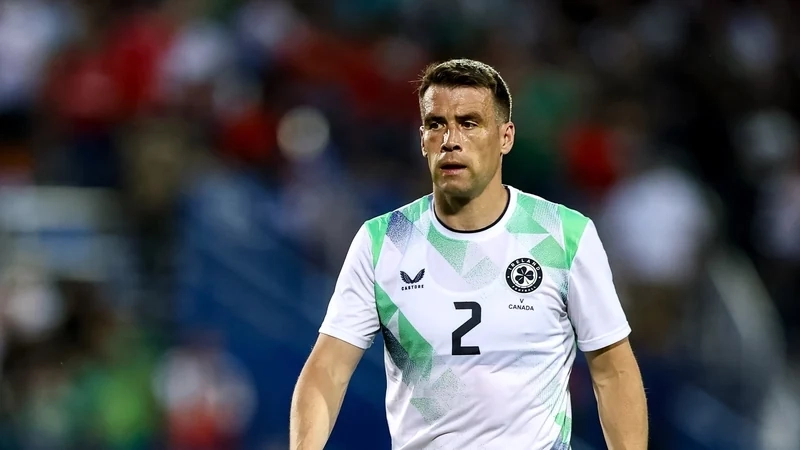
Ireland (Ireland Now News) November 3, 2026 – Former Republic of Ireland captain Séamus Coleman has confirmed he is still keeping the door open for a return to international and club football, despite acknowledging that his career is gradually edging toward retirement. As reported by sports journalist Gavin Cooney of The 42, the 38-year-old defender—currently a free agent after ending his 17-year spell with Premier League side Everton—clarified his position during a television appearance on Monday. Speaking as a pundit on Sky Sports’ coverage of Everton’s Premier League fixture against Newcastle United, Coleman addressed mounting speculation over his future, noting that while he is thoroughly enjoying family life and broadcast media duties, he remains in regular thought about his playing options after receiving encouragement from Republic of Ireland head coach Heimir Hallgrímsson.
- Key Points:
- What did Séamus Coleman say regarding his immediate playing future?
- How has Republic of Ireland manager Heimir Hallgrímsson handled Coleman’s squad status?
- How are former players and analysts assessing Coleman’s career trajectory?
- Background of Séamus Coleman’s International and Club Career
- Ireland’s Right-Back Depth and Coleman’s Transition into Coaching
What did Séamus Coleman say regarding his immediate playing future?
As reported by sports correspondent Gavin Cooney of The 42, Coleman addressed his current status directly on Monday evening, dispelling rumours that an immediate retirement announcement was imminent.
Addressing the ongoing speculation during Sky Sports’ pre-match broadcast, Séamus Coleman stated:
“I said I’ve not drawn a line in the sand completely on it because I know the Ireland manager would be keen to have me around if I was fit, and obviously that’s still something I’m thinking about.
“But I’m really enjoying not doing anything at the minute, being with my family and enjoying these little bits [of punditry] as well.”
The Donegal-born defender’s comments followed earlier remarks made last week during an interview with Jamie Carragher on The Overlap Fan Debate.
During that discussion, Coleman admitted that while he has maintained a basic level of physical fitness, the transition away from competitive action was progressing naturally.
Reflecting on his current mindset on The Overlap, Coleman observed:
“I don’t want to completely draw a line in the sand, as I said I’ve been keeping fit. But it’s edging towards that way – and happily as well.”
How has Republic of Ireland manager Heimir Hallgrímsson handled Coleman’s squad status?
As reported by football writer Paul O’Hehir of the Irish Mirror, Republic of Ireland head coach Heimir Hallgrímsson has maintained open dialogue with the veteran defender throughout the recent autumn international window.
Coleman was omitted from Hallgrímsson’s UEFA Nations League squad for the series of international fixtures in September and October 2026.
Initial indications from the coaching staff suggested that Coleman required a fixed club contract to maintain the match sharpness necessary for senior international selection ahead of the Euro 2028 qualification cycle.
However, Hallgrímsson reiterated his admiration for Coleman’s leadership within the squad, indicating that the door remains open for the former captain to contribute if he secures regular competitive football.
The Irish management team has continued to highlight Coleman’s value as a senior figure within the dressing room, even as the squad undergoes a broader generational transition.
How are former players and analysts assessing Coleman’s career trajectory?
As reported by sports reporter David Sneyd of The 42, former Republic of Ireland international Keith Treacy provided analysis on the player’s situation during a panel discussion on the RTÉ Soccer Podcast.
Treacy indicated that stepping out of the day-to-day routine of elite professional football often alters a player’s perspective on retirement.
Evaluating Coleman’s current position on the podcast, Keith Treacy stated:
“I think once you come out of those footballing circles and like Séamus is saying, he’s had Halloween at home with the family, you do start to soften.
“I was one that was saying we need to keep Séamus around for as long as possible. I have Euro 2028 in mind and thinking of being a host nation, and Séamus is a leader, we need him there.
“I think it’s a sign of how well this Irish group have done over the last couple of months that I can probably say if Séamus wants to go, we can let him go.”
Treacy further detailed the physical demands associated with playing in lower-tier domestic leagues, noting:
“I still love Séamus. I’d still love him to be around in terms of his leadership, in terms of geeing the lads up and doing all that type of stuff.
“I think it’s probably come to a natural conclusion.
“I can see a whole host of Championship clubs wanting him to play for them but Saturday- Tuesday, Saturday-Tuesday is absolutely relentless on your body.
“You do very little training, it’s game after game after game and we shouldn’t lose sight that Séamus has had some really career-ending injuries that he’s managed to bounce back from.
“So although he’s not, you know, pushing 40 and he needs to finish, he’s an older player and like I say, he’s had some bad injuries.
“So the fact that he stepped away from it and seems to be enjoying it, I think we’ve probably seen the last of Séamus Coleman.”
Also contributing to the RTÉ Soccer Podcast, analyst Alan Cawley noted that the timeline for UEFA Euro 2028—which is almost two years away—presents a significant physical hurdle for a player without a current club contract.
Adding to the discussion, former Derry City, Bohemians, and Glentoran manager Declan Devine advocated for retaining Coleman within the national setup in a non-playing capacity should he choose to officially retire.
Outlining a potential transition into coaching, Declan Devine stated:
“I think for the future generations and the younger generation of players in the squad, having Séamus Coleman talking in your ear can only be a positive thing.
“And hopefully if he does retire and that’s the way it’s going to end, then hopefully we’ll still see him in a Republic of Ireland tracksuit in the games to come.”
Background of Séamus Coleman’s International and Club Career
Séamus Coleman began his senior association football career with League of Ireland club Sligo Rovers after playing youth football for St Catherine’s in his native Killybegs, County Donegal. In January 2009, he signed for English Premier League side Everton for a nominal fee of £60,000, establishing a reputation as one of the most cost-effective acquisitions in modern British football history. Over the subsequent 17 seasons at Goodison Park, Coleman made more than 400 appearances across all competitions, eventually assuming the club captaincy and becoming Everton’s all-time record appearance maker in the Premier League era. His tenure was marked by remarkable resilience, notably returning to top-flight competition following a severe double leg fracture sustained on international duty in March 2017.
For the Republic of Ireland national team, Coleman earned over 70 senior caps following his debut in 2011. He was appointed national team captain by former manager Martin O’Neill ahead of the UEFA Euro 2016 tournament in France, where he led Ireland to the knockout stages, including a memorable 1-0 victory over Italy in Lille. Across consecutive international qualification campaigns under multiple managers, Coleman served as the team’s primary right-back and senior leader. Following the expiration of his final Everton contract in June 2026, Coleman chose not to immediately sign with another club, taking time to weigh his family commitments against potential playing opportunities.
Ireland’s Right-Back Depth and Coleman’s Transition into Coaching
Séamus Coleman’s ongoing deliberation over his playing career is predicted to accelerate the Republic of Ireland’s tactical transition under manager Heimir Hallgrímsson throughout the remainder of the 2026–2027 international calendar.
For the Republic of Ireland national squad, Hallgrímsson is predicted to continue blooding younger full-back options in upcoming international windows. Emerging talents across the Premier League and English Championship are expected to receive extended starter minutes to solidify the right-back and right wing-back positions. While Coleman’s potential return as a squad player remains a possibility should he sign a short-term club deal, the technical staff is actively building a defensive core capable of navigating the Euro 2028 qualification process independently of the veteran’s on-field presence.
For Séamus Coleman personally, any formal decision to hang up his boots is predicted to lead directly into a dual track of sports media work and coaching development. Given his standing within Irish football and the explicit support from figures like Declan Devine, the Football Association of Ireland (FAI) is expected to explore formal options to integrate Coleman into the national team’s backroom staff. Whether taking up a specialized defensive coaching role with the senior team or supporting the Under-21 development pipeline, Coleman is predicted to maintain a significant presence within Irish football long after his formal retirement from active play.